Microplastics for Breakfast Slovenia 2026
Event completed · Materials now available
Microplastics for Breakfast Slovenia 2026 took place on 7 May 2026 at the Chamber of Commerce and Industry of Slovenia in Ljubljana.
The event brought together researchers, companies, public institutions, policy representatives and other stakeholders working
The event brought together researchers, companies, public institutions, policy representatives and other stakeholders working
on micro- and nanoplastics. With 131 registered participants, 25 research and business pitches, 10 posters, expert talks, policy contributions and networking formats, it became the richest national MP4B event so far.
This page now serves as the event archive and provides access to the main materials, presentations, photo highlights and networking opportunities created through the event.
Download Abstract Book View Presentations See Photo Gallery Use the Networking Tool
Microplastics for breakfast Slovenia 2026 in numbers
131
Registered participants
25
Research and business pitches
10
Posters
60+
Reresearchers
17
Representatives from private sector
23
Representatives from public institutions, NGOs and related stakeholder groups
These numbers reflect the strong interest in micro- and nanoplastics research, monitoring, policy development and applied solutions in Slovenia.
What happened at the event
The event combined scientific presentations, policy perspectives, technical demonstrations, short pitches, poster presentations and interactive networking formats. It was designed as a meeting point between science, policy and practice, with the aim of strengthening cooperation within the Slovenian microplastics community and beyond.
Keynote and expert contributions
The event included expert contributions on current challenges in micro- and nanoplastics research, monitoring, regulation, health impacts, project development and knowledge transfer. These talks helped frame the discussion around what is already known, where knowledge is still missing and how scientific results can better support decisions in practice.
Equipment and analytical presentations
Technical presentations introduced advanced analytical approaches and instrumentation for the detection, identification and characterisation of micro- and nanoplastics. The equipment-focused sessions connected research needs with practical laboratory solutions, including FTIR, single-particle ICP-MS and GC-MS related approaches.
Keynote and expert contributions
The event included expert contributions on current challenges in micro- and nanoplastics research, monitoring, regulation, health impacts, project development and knowledge transfer. These talks helped frame the discussion around what is already known, where knowledge is still missing and how scientific results can better support decisions in practice.
Equipment and analytical presentations
Technical presentations introduced advanced analytical approaches and instrumentation for the detection, identification and characterisation of micro- and nanoplastics. The equipment-focused sessions connected research needs with practical laboratory solutions, including FTIR, single-particle ICP-MS and GC-MS related approaches.
Research, policy and industry pitches
Short pitch presentations gave researchers, companies and institutions the opportunity to present their work, expertise, ongoing projects and collaboration needs in a concise format. The pitch format created a fast overview of who is working on micro- and nanoplastics in Slovenia and where new connections could be made.
Fireside chat
The fireside chat Connecting Science and Industry: What Works in Practice and Where It Gets Stuck explored how research and industry can collaborate more effectively. Speakers highlighted the value of real-world problems, shared solution-building, reliable analytics, trust, patience and critical thinking.
Workshop with Dr João Frias
The interactive workshop A Menu for Change invited participants to co-design ideas and practical steps for stronger cooperation between science and industry. It supported dialogue, exchange of perspectives and reflection on how the community can move from knowledge and individual projects toward more coordinated action.
Short pitch presentations gave researchers, companies and institutions the opportunity to present their work, expertise, ongoing projects and collaboration needs in a concise format. The pitch format created a fast overview of who is working on micro- and nanoplastics in Slovenia and where new connections could be made.
Fireside chat
The fireside chat Connecting Science and Industry: What Works in Practice and Where It Gets Stuck explored how research and industry can collaborate more effectively. Speakers highlighted the value of real-world problems, shared solution-building, reliable analytics, trust, patience and critical thinking.
Workshop with Dr João Frias
The interactive workshop A Menu for Change invited participants to co-design ideas and practical steps for stronger cooperation between science and industry. It supported dialogue, exchange of perspectives and reflection on how the community can move from knowledge and individual projects toward more coordinated action.
Event outputs
Explore the main materials created through Microplastics for Breakfast Slovenia 2026.

Abstract Book
The Abstract Book brings together contributions from speakers, researchers, companies and poster presenters who participated in Microplastics for Breakfast Slovenia 2026.
Presentations
Selected presentations from the event are available with permission from the speakers. They include keynote, policy, technical and workshop-related contributions.

Photo Gallery
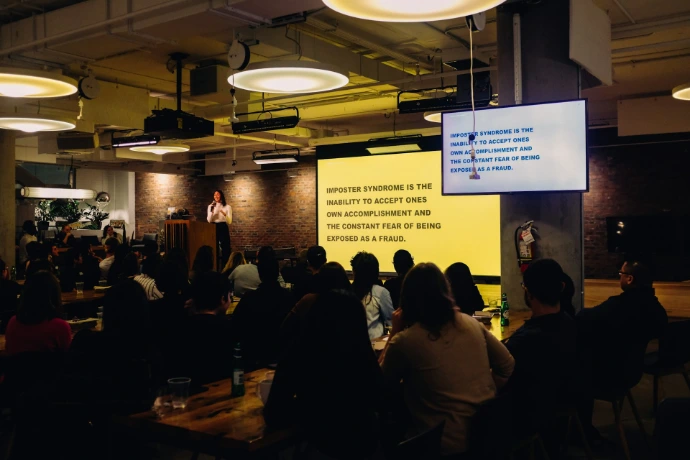
Explore moments from the event, including keynote lectures, pitch sessions, poster presentations, discussions, workshops and community networking.

Networking Tool
The MP4B networking tool remains available after the event to support new contacts, partnerships and collaborations between researchers, companies, public institutions and other stakeholders.
General sponsor of the event:

Gold sponsor:

Silver sponsor:

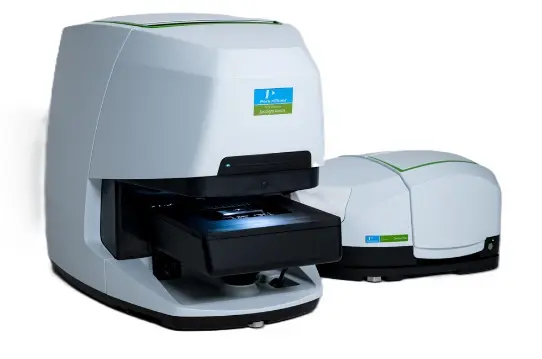
The new Spotlight Aurora automated, high-performance IR microscope, featuring an exceptionally sharp, high-resolution visible image
Spotlight Aurora is a new IR microscope from PerkinElmer featuring automated visible and infrared microscopy, motorized sample positioning (x,y) and autofocus, auto-correction, and automatic switching between transmission and reflection.
- An exceptionally enhanced visible image courtesy of improved z-axis focus (10x) and a dual-camera system
- Height-adjustable, resulting in a high-quality composite image
- Sample illumination modes (Darkfield, Brightfield, and mixed/combined illumination)
- A 4x larger field of view – 1x1 cm
- Improved image correction (tiling/stitching)
- A depth of field spanning hundreds of microns to millimeters (tuning) and an acquired 3D image
- Upgradable with up to three detectors: liquid nitrogen (LN2)-cooled MCT, TE-cooled MCT, DTGS, and InGaAs
- Sample thickness analysis up to a maximum of 61 mm
- Point-measurement sensitivity: typically better than 40,000:1 peak-to-peak (p-p), 2 minutes of collection time, at 4 cm⁻¹ resolution, within the 2200–2000 cm⁻¹ range
- The software enables routine microplastics analysis, providing information such as identification, particle size, surface area, polymer representation by fraction/percentage, and particle count.
Co-organizers of the event: